Jowar, Bajra and Wheat — India's three most ancient, most nourishing staple grains — grown on our mandala farms without chemicals, harvested at peak nutrition, and delivered whole to your kitchen.
Grains are the foundation of the Indian diet — the central carbohydrate source around which every meal is built. But the quality, variety and growing method of your grain determines whether it nourishes or depletes. Most commercially sold grains are polished, chemically stored, and grown with synthetic inputs that strip the germ and bran where all the nutrition lives.
Jowar (Sorghum), Bajra (Pearl Millet) and Wheat are India's three original staple grains — each cultivated for over 5,000 years, each perfectly adapted to India's climate, each vastly nutritionally superior to the polished, processed equivalents sold in modern retail. Millets like Jowar and Bajra are especially significant — drought-resistant, mineral-dense, low-glycemic and completely gluten-free, they were the original staple of rural India before refined wheat displaced them.
At Panchmandal, all three grains are grown on our mandala farms using Panchamahabhuta principles — no synthetic fertilisers, no pesticides, no post-harvest chemical storage. Harvested whole, stored naturally, and delivered unpolished and intact — retaining every layer of the grain exactly as nature grew it.
Annam Brahma — Food is God. The grain that sustains you is not merely nutrition; it is the living expression of the earth's abundance. Treat it with reverence.
— Taittiriya Upanishad · Ancient Sanskrit Text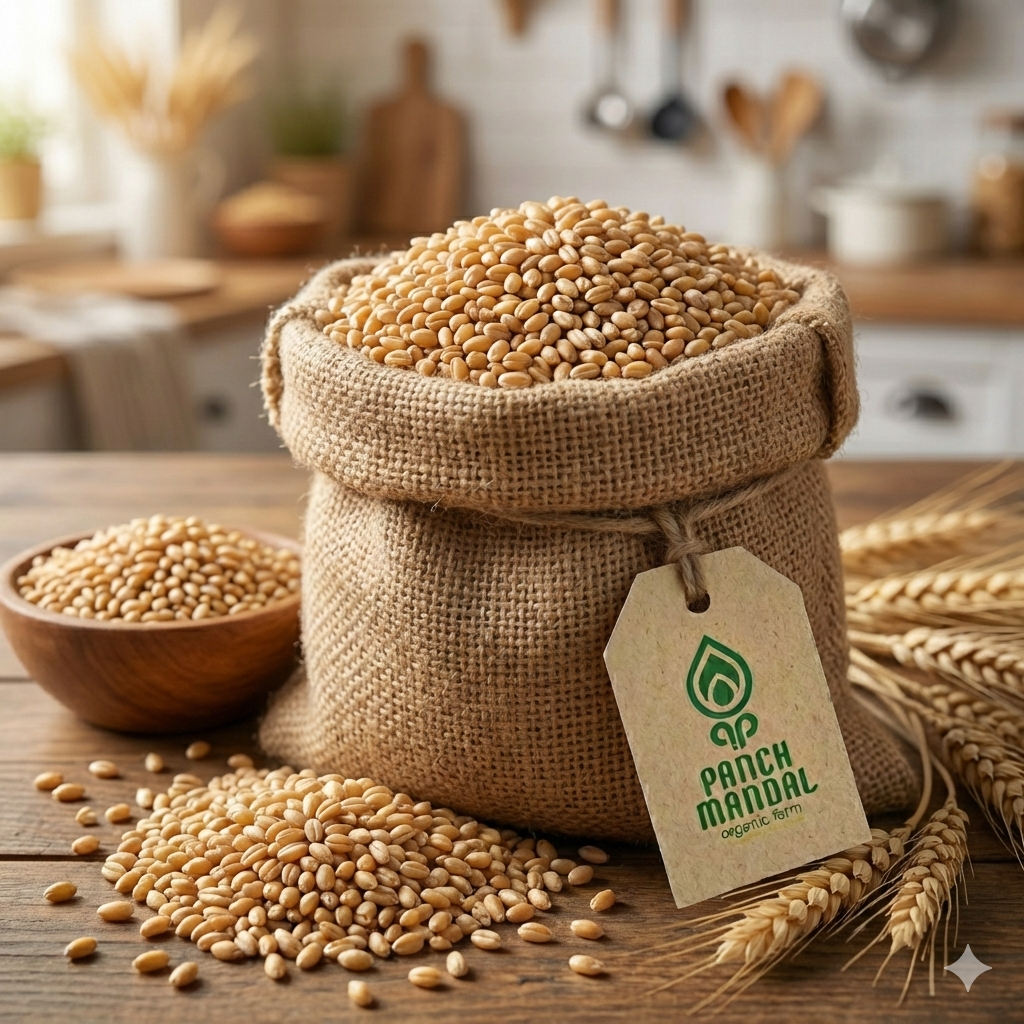
Jowar, Bajra and Wheat — each grain has its own unique nutritional character, flavour, texture and culinary application. All three are grown on Panchmandal's mandala farms and delivered whole, unpolished and chemical-free.
🌾 Jowar
GI: 52
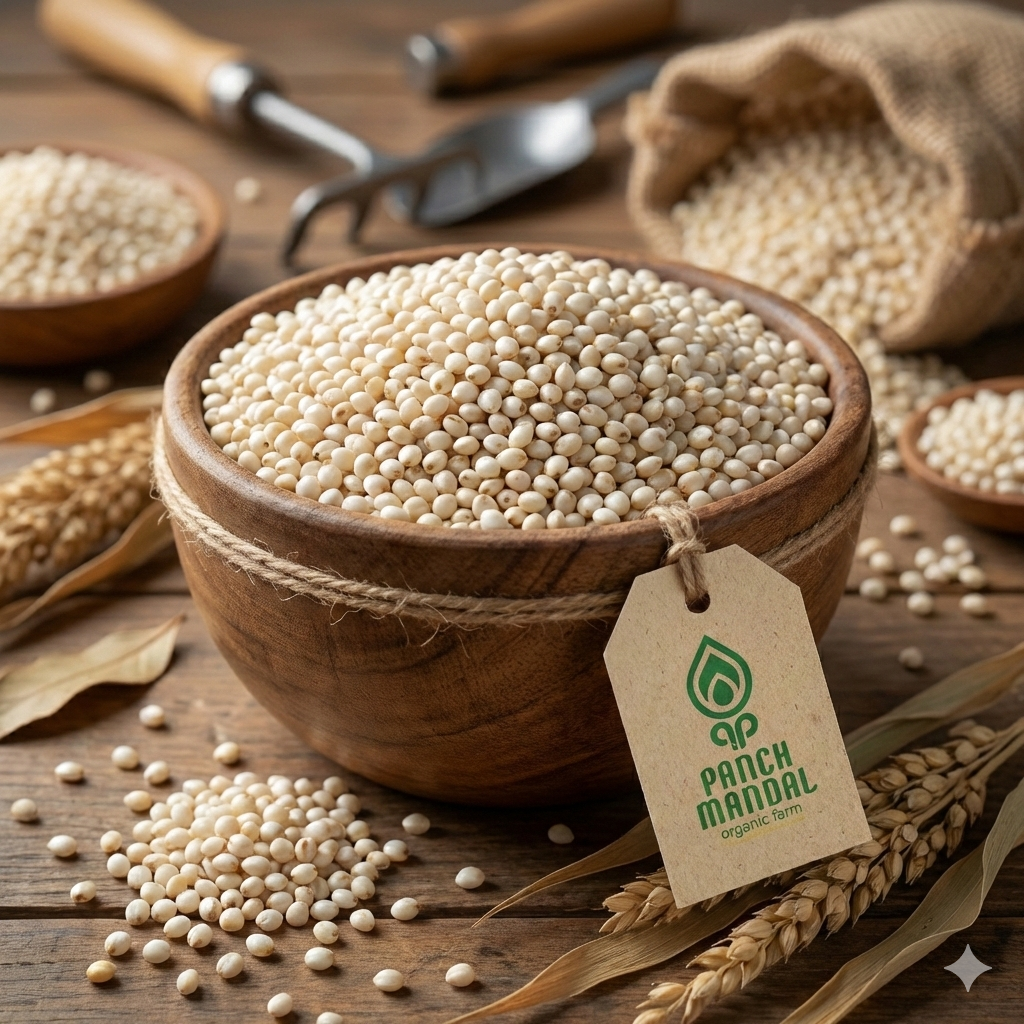
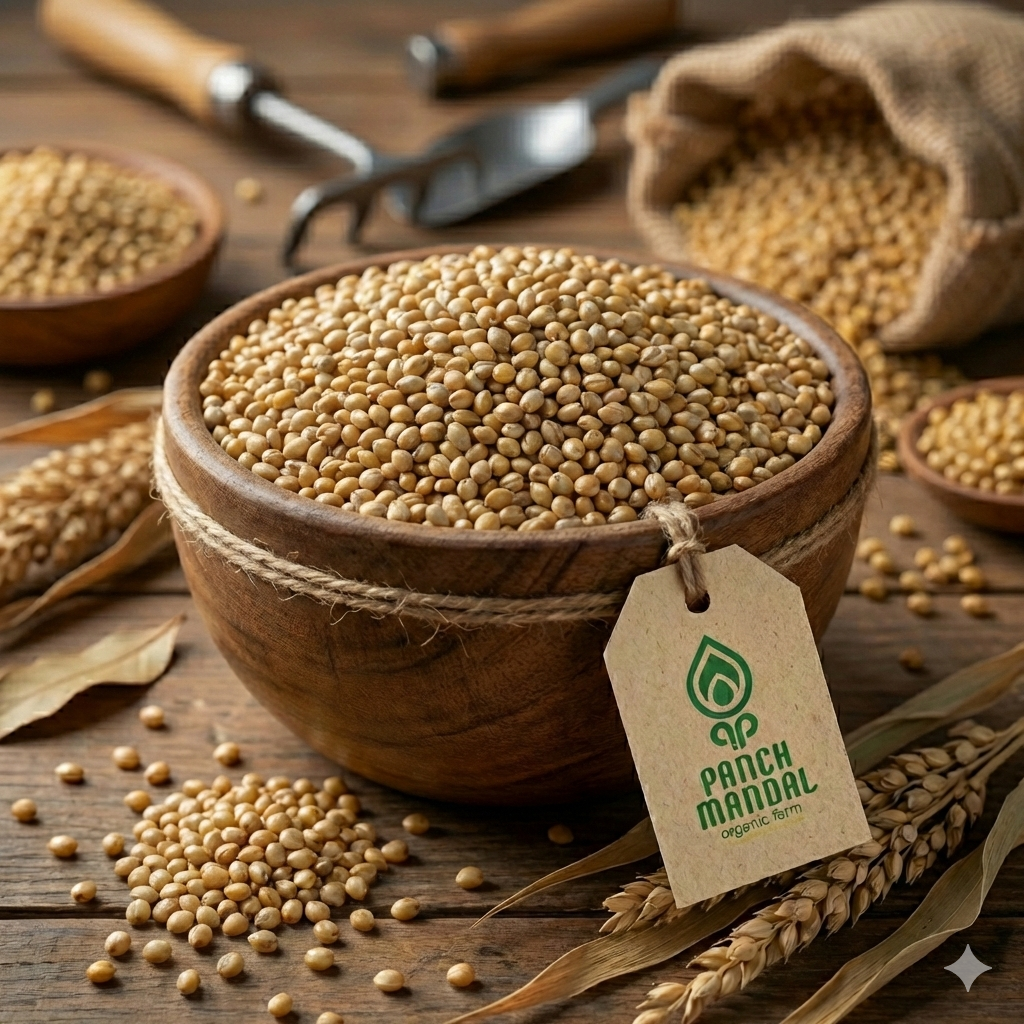
The grain of the Deccan plateau — jowar (sorghum) is Maharashtra and Karnataka's most ancient staple, grown for over 5,000 years. Completely gluten-free, drought-resistant and among India's most mineral-dense grains.
 🌱 Bajra
GI: 55
🌱 Bajra
GI: 55
India's most iron-dense grain — bajra (pearl millet) is the traditional staple of Rajasthan, Gujarat and Western India. Deeply warming in Ayurvedic terms, it is prescribed for winter consumption, bone health and anaemia prevention.
🌻 Wheat
GI: 54
Traditional desi wheat varieties grown on our mandala farms — completely different from the high-yield hybrid wheat sold commercially. Our wheat is grown without synthetic nitrogen fertiliser, harvested at natural maturity and stone-milled whole.
Each grain has a unique nutritional strength — jowar for antioxidants, bajra for iron and calcium, wheat for protein. Here's a side-by-side view per 100g.
💡 Highlighted values (gold) indicate the highest value in that row. Values are approximate per 100g whole, uncooked grain. Our organic, whole, unpolished grains retain full nutritional values — commercial polished/processed grains lose 30–70% of these nutrients.
No synthetic fertilisers, pesticides, herbicides or fungicides are used at any stage of growing. Our grains are certified organic — free from glyphosate residue and chemical contamination that is present in most commercial grains.
We never polish or refine our grains. The bran contains 80% of the fibre. The germ contains B vitamins, zinc, magnesium and essential fats. Polishing removes both — leaving only starch. Our grains arrive complete.
Mandala farming's companion planting and crop rotation means our soil is mineral-rich and biologically active. Grains grown in such soil have measurably higher mineral content than those grown in depleted monoculture fields.
Commercially stored grains are fumigated with phosphine and aluminium phosphide to prevent insect damage. Our grains are stored using traditional methods — neem, turmeric and natural ventilation — no chemical fumigation ever.
Modern high-yield grain varieties are bred for output, not nutrition. Our desi varieties are slower-growing, lower-yield traditional cultivars — but with 30–50% higher protein and mineral content than commercial hybrid varieties.
The shift from whole ancient grains to refined white rice and maida flour is the single biggest contributor to India's diabetes, obesity and nutritional deficiency epidemic
All three grains have a low GI (52–55) — significantly lower than white rice (GI 72) and maida (GI 85). Slow carbohydrate release prevents post-meal glucose spikes and reduces insulin resistance over time.
Whole grain fibre from jowar and wheat feeds beneficial gut bacteria (prebiotics), regulates bowel movements, reduces constipation and protects against colon cancer. 3× more effective than polished rice.
Bajra's 8mg iron per 100g makes it one of the strongest plant-based iron sources in the Indian diet. Combined with Vitamin C-rich foods, it dramatically improves haemoglobin levels naturally.
Bajra's 300mg calcium per 100g rivals dairy as a calcium source. Magnesium in all three grains is essential for calcium absorption and bone matrix formation — preventing osteoporosis and fractures.
Soluble fibre reduces LDL cholesterol. Magnesium and potassium regulate blood pressure. Phenolic antioxidants in jowar reduce arterial inflammation — a complete cardiovascular protection package.
High fibre content creates prolonged satiety, reducing overall caloric intake. Low GI prevents insulin-driven fat storage. Replacing refined grains with whole millets is one of the most effective weight management strategies.
Wheat's 13.7g protein per 100g supports muscle maintenance and repair. B vitamins in all whole grains are essential for cellular energy production — naturally sustaining energy without blood sugar crashes.
B vitamins (B1, B2, B3, B6, folate) in whole grains are the primary dietary support for the nervous system and brain function. Magnesium reduces stress and anxiety. Tryptophan in bajra supports serotonin production.
Jowar, Bajra and Wheat are incredibly versatile — they work in traditional recipes, modern dishes, and everything in between. Here's how to make the most of each grain every day.
The most direct and traditional way to consume these grains — flat breads that form the centre of every Indian meal.
Warm grain porridges are India's oldest breakfast — deeply nourishing, easy to digest and infinitely versatile.
Fermentation dramatically improves grain nutrition by breaking down phytic acid and increasing mineral bioavailability.
Ancient grains work beautifully in modern cooking — adding nutrition and unique flavour to familiar dishes.
Whole grain flours create denser, more nutritious baked goods with deeper, nuttier flavour profiles.
Whole grain porridges are the most appropriate complementary food for infants and the easiest nutrition for elderly.
Commercial grain supply chains involve chemical fertilisers, pesticide spraying, post-harvest fumigation and often polishing that strips away most nutrition. Ours is completely different.
Our Jowar, Bajra and Wheat are grown directly on Panchmandal's mandala farms using Panchamahabhuta principles — circular polyculture plots with zero synthetic inputs, building soil fertility naturally every season.
We grow traditional, slow-maturing desi varieties that have been cultivated in India for millennia. These varieties have superior nutritional profiles, better drought resistance, and deeper flavour than modern high-yield hybrids.
We never polish, dehull or refine our grains beyond what's necessary to remove husk. Both the bran (fibre, B vitamins) and germ (minerals, healthy fats) are preserved — the parts most commercial processing removes.
Conventional grain storage uses aluminium phosphide and phosphine fumigants to prevent insect damage. We store our grains using neem, turmeric, sun-drying and proper ventilation — zero chemical storage at any point.
We supply grain from the current season's harvest — not from bulk silos of previous years' stock. Fresh-harvest grains retain their natural oils, vitamins and aroma. Old stored grain loses these qualities progressively.
Thousands of years of Indian agriculture perfected these three grains for your climate, your gut, and your health. Grown on our mandala farm, delivered whole and fresh — this is food the way it was always meant to be.