Chana Dal, Moong Dal and Urad Dal — three of India's most ancient, most nourishing lentils — grown on our mandala farms without chemicals, split fresh, and delivered clean to nourish your family every day.
Dal is not merely a dish — it is the nutritional backbone of the Indian diet. For over 5,000 years, lentils and pulses have provided the primary protein source to the majority of India's population. In a largely plant-based food culture, dal is irreplaceable — the meeting point of flavour, tradition, affordability and complete nutrition.
But most commercially sold dal today is a compromised product. Lentils are polished with synthetic oils to create an appealing shine, fumigated with phosphine during storage, grown with heavy pesticide applications and often sold from bulk stocks that are 1–3 years old. The nutritional and taste difference between fresh-harvest organic dal and commercial dal is profound and immediately apparent when you cook them.
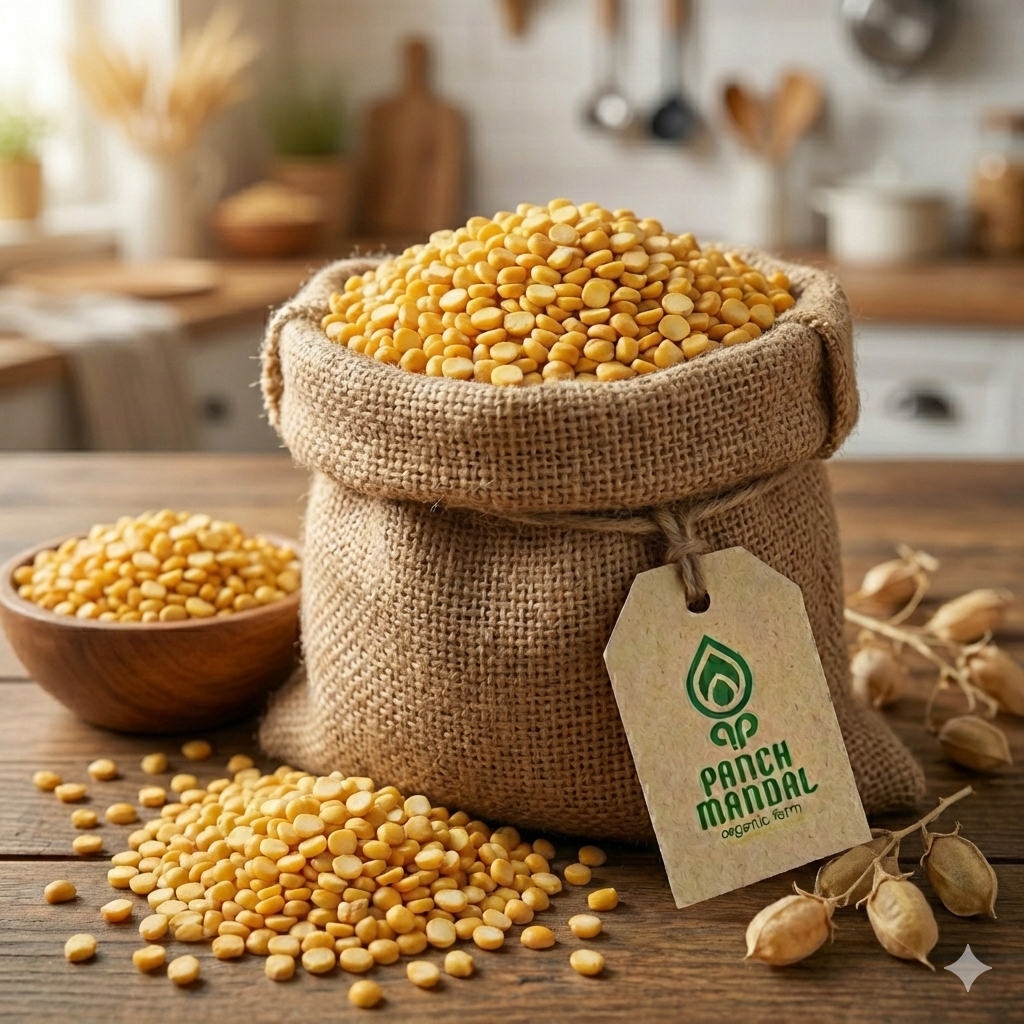
Panchmandal's Chana Dal, Moong Dal and Urad Dal are grown directly on our mandala farms using Panchamahabhuta principles — no synthetic inputs, no polishing oil, no post-harvest fumigation. Split fresh, stored naturally, and delivered within the harvest season for the fullest flavour and highest nutrition you will ever taste in a dal.
Dal-chawal is the great equaliser of India — the meal that has nourished saints and kings, farmers and scholars alike. There is no greater comfort food, and no simpler complete nourishment.
— Traditional Indian Food Wisdom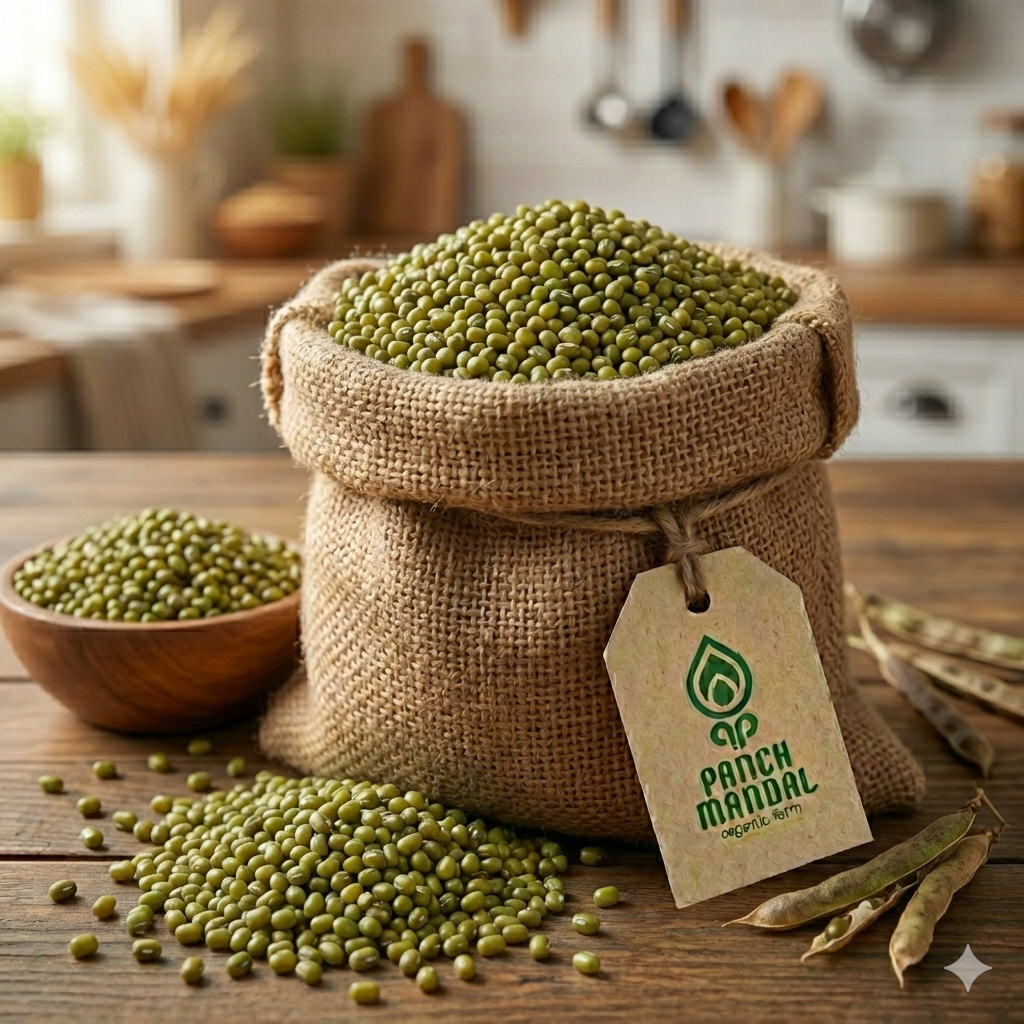
Chana Dal, Moong Dal and Urad Dal — each with a distinct nutritional profile, flavour, texture and culinary tradition. All three are grown on Panchmandal's mandala farms, split fresh and delivered chemical-free.
🟡 Chana Dal
~22g Protein/100g
Split and hulled Bengal gram — India's most widely consumed and arguably most nutritionally dense dal. Rich in protein, fibre, iron and zinc with an extraordinarily low glycemic index of just 8, making it the most diabetes-friendly of all lentils.
💚 Moong Dal
~24g Protein/100g
Split green gram — Ayurveda's most revered dal, described as the most sattvic, most easily digestible and most universally suitable of all lentils. Prescribed for the sick, the elderly, infants, pregnant women and anyone beginning a cleanse or recovery diet.
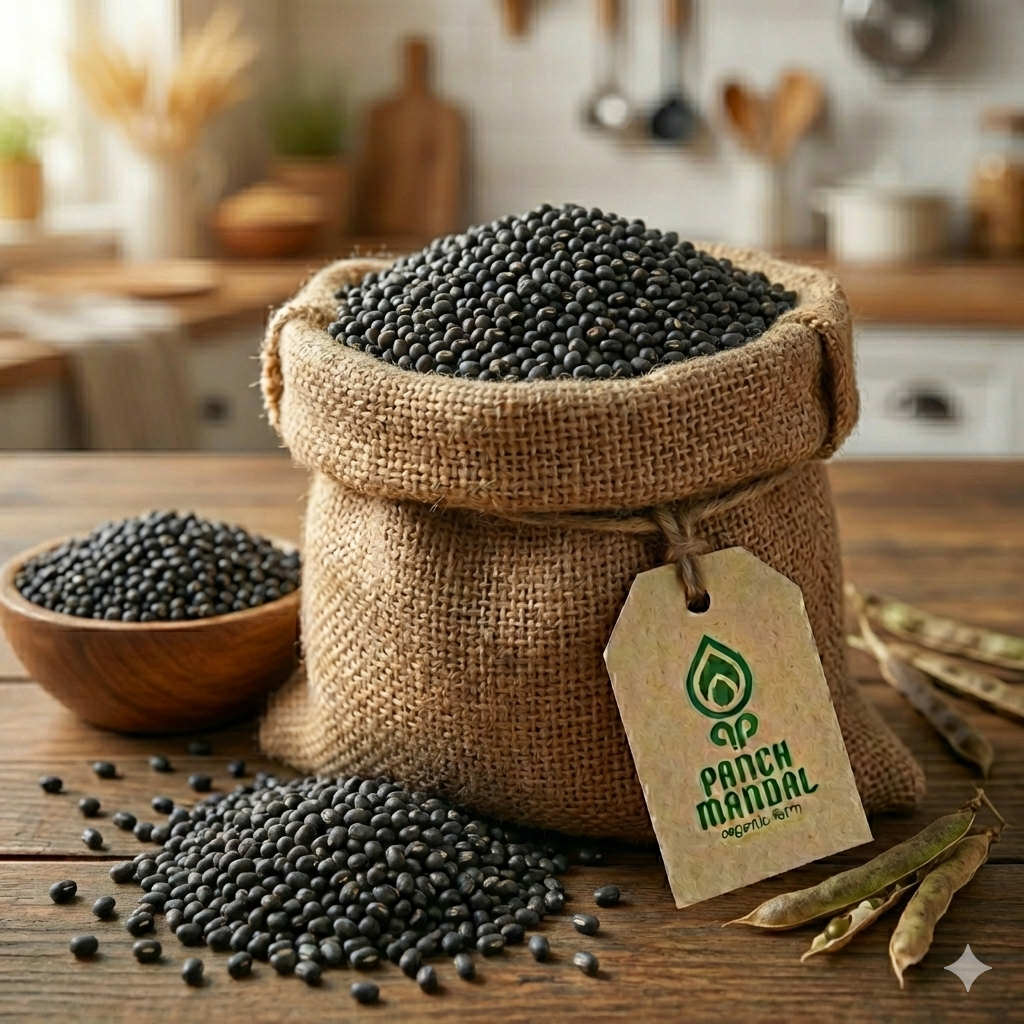 ⚫ Urad Dal
~26g Protein/100g
⚫ Urad Dal
~26g Protein/100g
Split black gram — the richest dal in protein, calcium and iron among the three. The foundation of South Indian cuisine, essential for fermentation in idli-dosa, and prescribed in Ayurveda as a strength-building, bone-nourishing and Vata-pacifying lentil.
Lentils deliver more protein per rupee than any other food in the Indian diet. Here's how our three dals compare nutritionally — and how they measure up against other protein sources.
💡 Highlighted values (gold) indicate the highest value in that nutrient across the three dals. Values are approximate per 100g dry, uncooked weight. Protein values shown per 100g dry weight — when cooked, dal expands 2–3× but protein density per serving remains exceptional.
All three dals are grown on our mandala farms with zero synthetic pesticides, herbicides or chemical fertilisers. Lentils are nitrogen-fixing legumes — they actually improve soil health without any fertiliser inputs.
Commercial dal is polished with refined oils to add visual appeal. Our dal is unpolished — the surface appears matte and slightly irregular. This is the natural appearance of honest dal, not a defect.
Legumes are nature's soil builders. In our mandala polyculture, dal crops fix atmospheric nitrogen, enriching the soil for surrounding crops — creating a natural fertility cycle without synthetic fertiliser.
Commercially stored dal is fumigated with phosphine gas to prevent insect damage. Phosphine residue remains in stored grain and is ingested. We store dal using neem, turmeric and natural ventilation — zero fumigation.
We grow traditional desi varieties of chana, moong and urad — slower-growing, lower-yield, but with measurably higher protein content, better flavour complexity and superior digestibility compared to modern hybrid cultivars.
Modern nutritional science increasingly validates what Indian tradition has known for millennia — daily dal consumption is one of the most powerful preventive health practices possible
22–26g protein per 100g makes dal India's most accessible, affordable complete plant protein. When combined with rice or wheat (dal-chawal, dal-roti), the amino acid profiles complement perfectly for full essential amino acid coverage.
Chana dal's GI of just 8 is one of the lowest of any food — dramatically slowing glucose absorption. Regular dal consumption significantly reduces post-meal blood sugar spikes and HbA1c over time in Type 2 diabetics.
Soluble fibre in all three dals binds bile acids and removes LDL cholesterol from circulation. Potassium and magnesium reduce blood pressure. Folate reduces homocysteine — a key marker of cardiovascular disease risk.
High fibre feeds beneficial gut microbiome bacteria (prebiotic effect). Moong dal is specifically prescribed in Ayurveda for its anti-inflammatory gut action and ease of digestion even for sensitive digestive systems.
Chana and urad dal provide 4–5mg iron per 100g — comparable to red meat. Combined with Vitamin C sources (tomato, lemon) in tadka, iron absorption from dal increases 3–5×, making dal a potent anaemia remedy.
Urad dal's 138mg calcium per 100g supports bone density. Magnesium in moong dal is essential for calcium absorption. Urad dal's mucilage lubricates joints — Ayurveda's primary food prescription for arthritis and Vata disorders.
High protein and fibre in all three dals create extended satiety — reducing overall caloric intake naturally. Low GI prevents insulin-driven fat storage. Dal is the most evidence-backed food for sustainable weight management in Indian populations.
Dal's resistant starch and fibre are among the most effective prebiotics — feeding Lactobacillus and Bifidobacterium colonies. A healthy gut microbiome built on daily dal consumption is the foundation of systemic immune health.
Three dals — infinite possibilities. Each variety has its own culinary character and works best in specific preparations. Here's a complete guide to getting the most from every variety.
The most direct and most nourishing use — a well-made dal is a complete meal and one of India's most therapeutic foods.
Dal forms the base of India's most beloved fermented and batter-based preparations — each unique and deeply nutritious.
Sprouting dramatically improves dal nutrition — increasing Vitamin C, folate, and protein bioavailability by reducing anti-nutrients.
Cooked lentils work beautifully in modern preparations — protein-dense and deeply flavoured.
Dal features prominently in Indian sweets and festival foods — adding protein to traditionally dessert-focused occasions.
Dal is the most appropriate first protein food for babies and the most digestible complete nutrition for elderly.
The commercial dal supply chain involves polishing, fumigation and often years of storage. Our dal is the opposite — farm-grown, freshly split, honestly delivered.
All three dals are grown directly on Panchmandal's mandala farms. You can trace exactly which field, which season and which farmer grew your dal — the complete opposite of anonymous commodity grain supply chains.
Our dal looks matte and natural because it is unpolished. No refined oil coating, no mineral oil treatment, no synthetic surface treatment of any kind. The natural colour variation and slight imperfection is honesty, not poor quality.
Modern hybrid dal varieties are bred for uniform appearance and high yield, not protein content. Our desi varieties grow slower but produce dal with 15–20% higher protein content and a significantly deeper, richer flavour when cooked.
Our dal is stored using natural methods — neem leaves, turmeric, sun-drying and proper ventilation. No phosphine fumigation, no aluminium phosphide, no methyl bromide — none of the chemicals standard in commercial dal storage.
Most commercial dal is from storage that is 1–3 years old. Old dal takes longer to cook, absorbs less water, has reduced protein bioavailability and flat flavour. Our dal is from the current harvest — the difference in taste is immediately noticeable.
Farm-grown, unpolished, chemical-free, freshly split and delivered within the harvest season. When you taste the difference between honest dal and commercial dal, you will never go back. This is the real thing.